








Jakarta vs Secondary Cities: Where Should You Incorporate Business in Indonesia?
Content
When expanding into Indonesia, one of the most overlooked but crucial decisions investors face is choosing the right city for company registration. While Jakarta is the nation’s economic and political hub, other cities such as Bali, Surabaya, Batam, and Medan are increasingly attracting foreign investment due to their unique advantages.
Your company’s location influences regulatory access, operational costs, market reach, and even brand positioning. In this article, we explore whether Jakarta or secondary cities in Indonesia might be the best fit for your business setup.
Why Location Matters in Company Registration
Choosing a business location in Indonesia is more than just picking an office address. It directly impacts:
- Legal & Licensing – Certain permits are tied to specific regions. A registered office address is mandatory for obtaining a Business Identification Number (NIB) via OSS-RBA.
- Operational Costs – Rent, labor, and utilities vary widely across cities.
- Market Access – Proximity to customers, suppliers, and trade hubs matters for growth.
- Tax Incentives – Some regions, such as Free Trade Zones, offer reduced duties or exemptions.
Find the right steps to incorporate business in Indonesia here: Business Registration in Indonesia: Step-by-Step Guide for 2025.
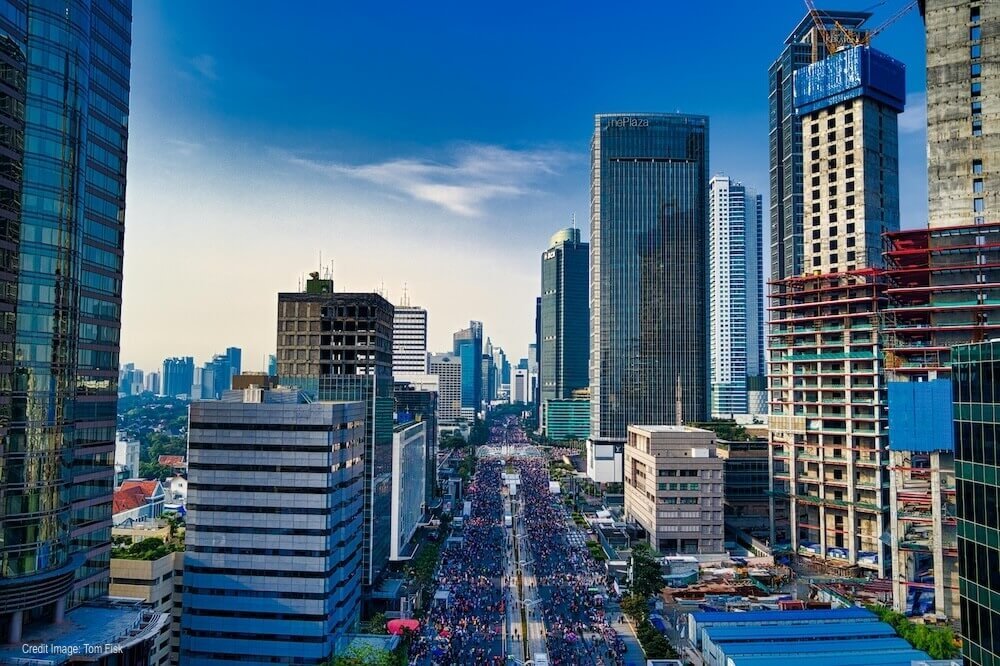
Jakarta: Indonesia’s Business Capital
As the capital and economic powerhouse, Jakarta remains the top choice for many foreign investors.
Advantages:
- Home to central government offices and key ministries.
- Best infrastructure in Indonesia (corporate offices, international banks, transport networks).
- Headquarters for multinational corporations and major local conglomerates.
- Strong talent pool for finance, technology, and professional services.
Challenges:
- High cost of living and expensive office rentals.
- Traffic congestion and regulatory complexity.
- Intense competition across industries.
📌 Jakarta is ideal for companies seeking prestige, direct regulatory access, and visibility with clients and partners.
Bali: Tourism and Creative Hub
Known globally as a paradise for travelers, Bali has evolved into a hotspot for hospitality, F&B, and the creative economy.
Advantages:
- Strong tourism ecosystem → ideal for hotels, restaurants, entertainment, and lifestyle businesses.
- Growing community of digital entrepreneurs and expats.
- Brand value: “Bali-based” carries global recognition.
Challenges:
- Limited infrastructure for manufacturing or large-scale logistics.
- Seasonal business cycles are tied to tourism trends.
- Regulations can be stricter for property and land ownership.
📌 Bali is ideal for companies in hospitality, F&B, tourism tech, and creative industries.
Surabaya & East Java: Industrial Growth Center
As Indonesia’s second-largest city, Surabaya plays a vital role in trade and industry.
Advantages:
- Strategic port city connecting East Java to eastern Indonesia.
- Lower cost of living and labor compared to Jakarta.
- Strong base for manufacturing, agribusiness, and logistics.
Challenges:
- Local government regulations may differ from national OSS guidelines.
- Talent pool is growing, but less specialized than Jakarta.
Surabaya is ideal for manufacturers, exporters, and logistics providers looking for lower operational costs.
Batam & Free Trade Zone Cities
Located close to Singapore and Malaysia, Batam is a prime destination for companies targeting the regional supply chain.
Advantages:
- Part of the Batam-Bintan-Karimun (BBK) Free Trade Zone.
- Customs and tax incentives for manufacturing and export businesses.
- Excellent access to Singapore’s financial and logistics ecosystem.
Challenges:
- Infrastructure is still developing in certain sectors.
- Dependent on external trade demand.
Batam is ideal for electronics, shipbuilding, logistics, and cross-border trade companies.
Other Secondary Cities (Medan, Makassar, etc.)
While less globally known, other cities also hold investment opportunities:
- Medan – gateway to Sumatra’s agribusiness, palm oil, and mining sectors.
- Makassar – hub for eastern Indonesia, strong in seafood, trade, and shipping.
- Bandung & Semarang – rising hubs for tech startups, textiles, and creative industries.
These cities are ideal for companies willing to commit long-term and build strong local partnerships.
How to Decide the Best Location
Choosing between Jakarta and secondary cities depends on your business priorities. Consider:
- Industry Focus – Jakarta for services & HQ, Bali for tourism, Batam for trade, Surabaya for manufacturing.
- Budget & Costs – Secondary cities generally offer lower rent and wages.
- Regulatory Convenience – Jakarta offers quicker access to ministries, but OSS-RBA now centralizes licensing.
- Scalability – If long-term expansion is planned, Jakarta remains the safest HQ location.
Some companies use a hybrid model: register HQ in Jakarta for compliance and prestige, while operating branches in secondary cities for efficiency.
Best Practices for Foreign Investors
- Don’t choose a location only for lifestyle appeal; always check compliance requirements.
- Factor in logistics and distribution networks for supply chain businesses.
- Engage with local consultants to avoid regulatory surprises.
- Consider future growth strategy: it may be wise to start in Jakarta and expand later.
Business Hub Asia helps investors evaluate the legal, tax, and operational implications of each location to maximize market entry success.
Conclusion
Whether Jakarta or a secondary city is right for your business depends on industry, budget, and growth objectives. Jakarta offers unmatched prestige and access, while Bali, Surabaya, Batam, and others provide cost advantages and niche opportunities.
Partner with Business Hub Asia to determine the best registration strategy for your company in Indonesia. From legal incorporation to ongoing compliance, we help you build a strong foundation for long-term success.

Michal is a CPA Australia-accredited entrepreneur with 15+ years of experience across Southeast Asia. Founder of Cekindo, now part of InCorp Group, he advises global firms on market entry, compliance, and expansion in Indonesia, Vietnam, and the Philippines.
Stay updated with market insights
Get in Touch With Our Team
Let us know how we can assist with your company formation or expansion.
Start Your SEA Market Entry with Confidence
Business Hub Asia is ready to help you navigate Indonesia, Vietnam, and Philippines regulations, from business licensing and product registration to workforce management. With an efficient, accurate, and business-focused approach.
Disclaimer
The content provided on this website is published by PT. Bisnis Hub Asia (“we“, or “us“) for general informational purposes only. While every effort is made to ensure the accuracy and timeliness of the information presented, we make no representations or warranties, express or implied, as to the completeness, accuracy, reliability, suitability, or availability of any content, products, or services described on this website. Any reliance placed on such information is strictly at the user’s own risk.
We are a private, independent entity and are not affiliated with, authorized by, or acting on behalf of the Government of the Republic of Indonesia, its ministries, agencies, or any officially appointed representatives. This website does not provide, offer, or promote any official government documents or services, including but not limited to:
-
Business identification numbers (Nomor Induk Berusaha – NIB);
-
Tax refunds or rebates;
-
Stay Permit or electronic travel authorizations;
-
Passports or other immigration-related documents.
Any references to such services are provided solely for general informational purposes and should not be construed as an offer or facilitation of official services.
We are committed to ensuring the protection of your personal data in accordance with Law No. 27 of 2022 on Personal Data Protection. Any personal information collected through this website will be processed for the purposes clearly stated in our [Privacy Statement]. We do not sell or misuse personal data under any circumstances.
By accessing and using this website, you acknowledge and agree to the terms set out in this Disclaimer. You further agree to use this website and the information provided responsibly and in compliance with applicable laws and regulations.
For further information or questions regarding this Disclaimer, please contact us via the channels provided on our Contact page.
You May Also Like
Stay informed with our latest insights, guides, and articles on doing business in Southeast Asia.
Guides, Tax & Accounting
Navigating SP2DK Indonesia: A Strategic Guide for Local and Foreign Companies

Nurmia Dwi Agustina, S.E., MBA • 4 minutes read
Guides, Tax & Accounting
Received an SP2DK Indonesia? Why There is No Need to Panic
Nurmia Dwi Agustina, S.E., MBA • 4 minutes read
Guides
The Complete Guide to Singapore Work and Family Passes [2026 Edition]

Pradana Vincentiar • 6 minutes read